Assiah
Living with 7 vampiresAssiah, also identified as Y/N’s mother, is the maternal and supernatural force who links Y/N’s earliest trauma to the story’s final act of memory control. Her significance lies in the contradiction she embodies: she is both the figure whose absence initiates Y/N’s abandonment and the figure who later offers access to the hidden past, yet her protection ultimately takes the form of erasure rather than shared knowledge.
Identity and First Appearance
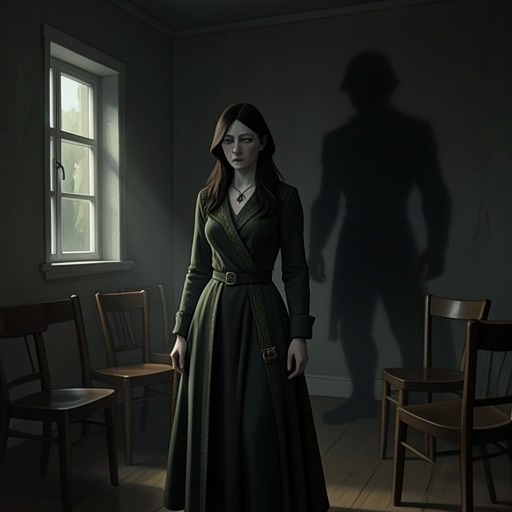
Assiah enters the narrative through uncertainty. When Y/N encounters her, an unidentified woman says that they have finally met, then reveals that Y/N no longer knows her. The meeting therefore establishes Assiah not simply as a mother returning to her child, but as a person already separated from Y/N by a damaged or deliberately altered history. Her identity is withheld at first, making recognition itself part of the plot’s mystery.
The later recollection places Assiah in an earlier period of Y/N’s life. Y/N sees a woman enter a richly furnished room, and the woman is identified as Y/N’s mother; she looks neither older nor younger. This unchanged appearance marks Assiah as different from an ordinary human and gives the recovered scene a suspended, supernatural quality. The memory does not merely explain who she is. It shows that ordinary chronology does not fully govern her body or her relationship to Y/N.
Motherhood, Abandonment, and Recovered History
Assiah’s maternal role is inseparable from Y/N’s abandonment. In the earlier scene, Y/N’s mother tells Y/N to leave the car and promises to come outside, but closes the door and drives away as soon as Y/N gets out. Y/N is left calling for her to return while the car disappears into the distance. This act makes Assiah’s later appearance morally charged: the mother who offers answers is also connected to the original wound that made answers necessary.
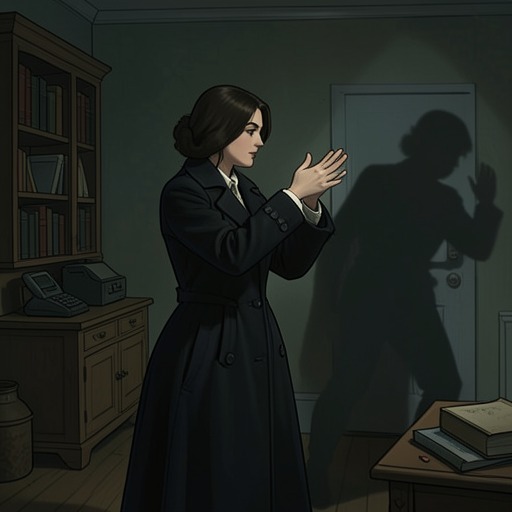
When Assiah reappears in the memory sequence, she acknowledges the questions created by that abandonment. She presents herself as able to help Y/N discover why she left and invites Y/N to go back in time, taking Y/N’s hand gently before beginning the return to the past. The gesture combines tenderness with control. Assiah does not wait for Y/N to reconstruct the history independently; she becomes the guide and gatekeeper of the recollection, deciding when the past can be entered and what form its revelation will take.
The memory ends abruptly. The room turns white, and Y/N is returned to the place with four mirrors, asking whether that was all. The interruption leaves the recovered history incomplete and makes the mirrors an important counterpart to Assiah’s memory work. The past is accessible, but only in fragments, and Assiah’s intervention does not produce a complete or stable account of Y/N’s origins.
Power, Gehenna, and the Confrontation with Y/N
Assiah’s connection to the supernatural order becomes clearer when Gehan is identified as the ruler of Gehenna, described as Hell in human terms. This revelation places Y/N’s family history within a cosmology larger than the human world and helps explain why Assiah cannot be understood as an ordinary mother. Her presence is associated with the same network of rulers, blood-linked power, gates, and otherworldly forces that governs the conflict around Y/N.
During the confrontation with Gehan, Y/N reaches into one of Gehan’s pockets, takes a glass ball, pushes him away, and concentrates on making the gates of Hell appear. A red light then falls over Y/N, freeing movement, and a blood-red moon becomes visible. The scene shows Y/N acting with extraordinary agency, but it also establishes the dangerous scale of the power being released. Assiah is not immediately the source of this action; instead, she becomes the person who must respond when Y/N’s power exceeds Y/N’s control.
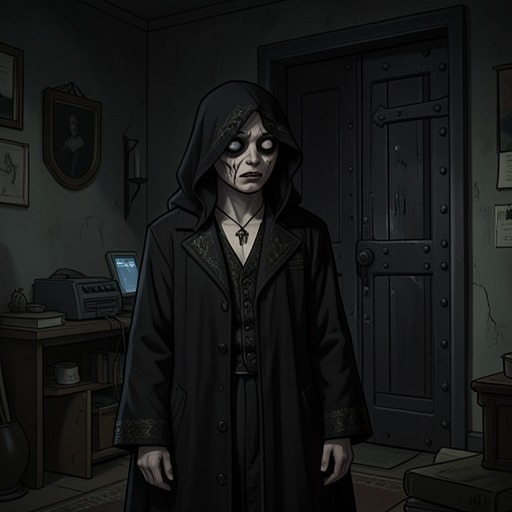
After Gehan is challenged, a blue bubble grows and changes into a human form: Assiah. She appears worried and asks whether the figure before her is Y/N. Her arrival turns the supernatural rescue into a maternal encounter, but it does not resolve the danger. Assiah later explains that Y/N had been possessed by Y/N’s own power. The wording shifts the threat from an external enemy to an internal force, presenting Y/N’s power as capable of taking control of its own bearer.
Memory Erasure and the Final Consequence
Assiah’s decisive act occurs after the struggle involving Y/N and Assiah in the air. Jin observes that something is deeply wrong with Y/N, and the others confront Assiah when she approaches. She assures them that she does not intend to harm Y/N, then explains that Y/N was possessed by Y/N’s own power. Her explanation frames her intervention as containment and rescue rather than attack, but the means she chooses remains severe.
Assiah states that Y/N will be all right because she erased Y/N’s memory. The declaration produces immediate shock from Suga and questions from Jimin and J-Hope. Memory erasure therefore functions as both treatment and violation: it removes the supernatural knowledge that threatens Y/N, while also taking away Y/N’s ability to understand the forces that shaped her life. Assiah restores safety by destroying continuity, replacing dangerous recognition with ignorance.
Her intervention also extends beyond Y/N. Assiah identifies a mark associated with Gehan’s curse on Bambam after Bambam has suffered a hole through the chest while trying to stop Y/N. She tells the group that they have been under the curse for too long, then places her fingers on the mark and concentrates on its energy flow. The action presents her as a healer and curse-breaker, but it also reinforces her power to alter the conditions of other people’s bodies and memories. Her care operates through direct control over wounds, marks, energy, and recollection.
Narrative Role and Significance
Assiah occupies several narrative functions at once: absent mother, guide to forbidden history, supernatural witness, protector, and agent of institutional forgetting. The book repeatedly associates knowledge with material and visual gateways. Y/N opens a book with a key and reads a diary-like entry dated 14 April; Y/N later returns from a vanished mirror to a room where V is waiting; and the memory of Assiah is entered and exited through a white transformation and four mirrors. Against these discovery mechanisms, Assiah offers a different form of access: personal testimony and controlled memory.
Her relationship with Y/N is consequently defined by unstable reversals. Assiah leaves Y/N, then offers to explain the departure. She appears as a mother, yet her agelessness signals a nonhuman identity. She approaches Y/N with apparent concern, yet resolves the crisis by erasing Y/N’s memory. She claims not to mean harm, but her solution permanently changes what Y/N can know about the self and the past. Assiah’s protection is therefore inseparable from authority: she decides which memories are too dangerous to retain and which history can be revealed.
Assiah’s final significance lies in the unresolved cost of her mercy. By removing Y/N’s supernatural memories, she may prevent further possession, but she also interrupts the process by which Y/N might integrate the divided forces within the self. The ending turns motherhood into a politics of memory. Assiah does not merely care for Y/N; she determines the conditions under which Y/N can remember, recognize, and become a coherent person. In that sense, she is both the keeper of Y/N’s origin and the person who closes the archive.